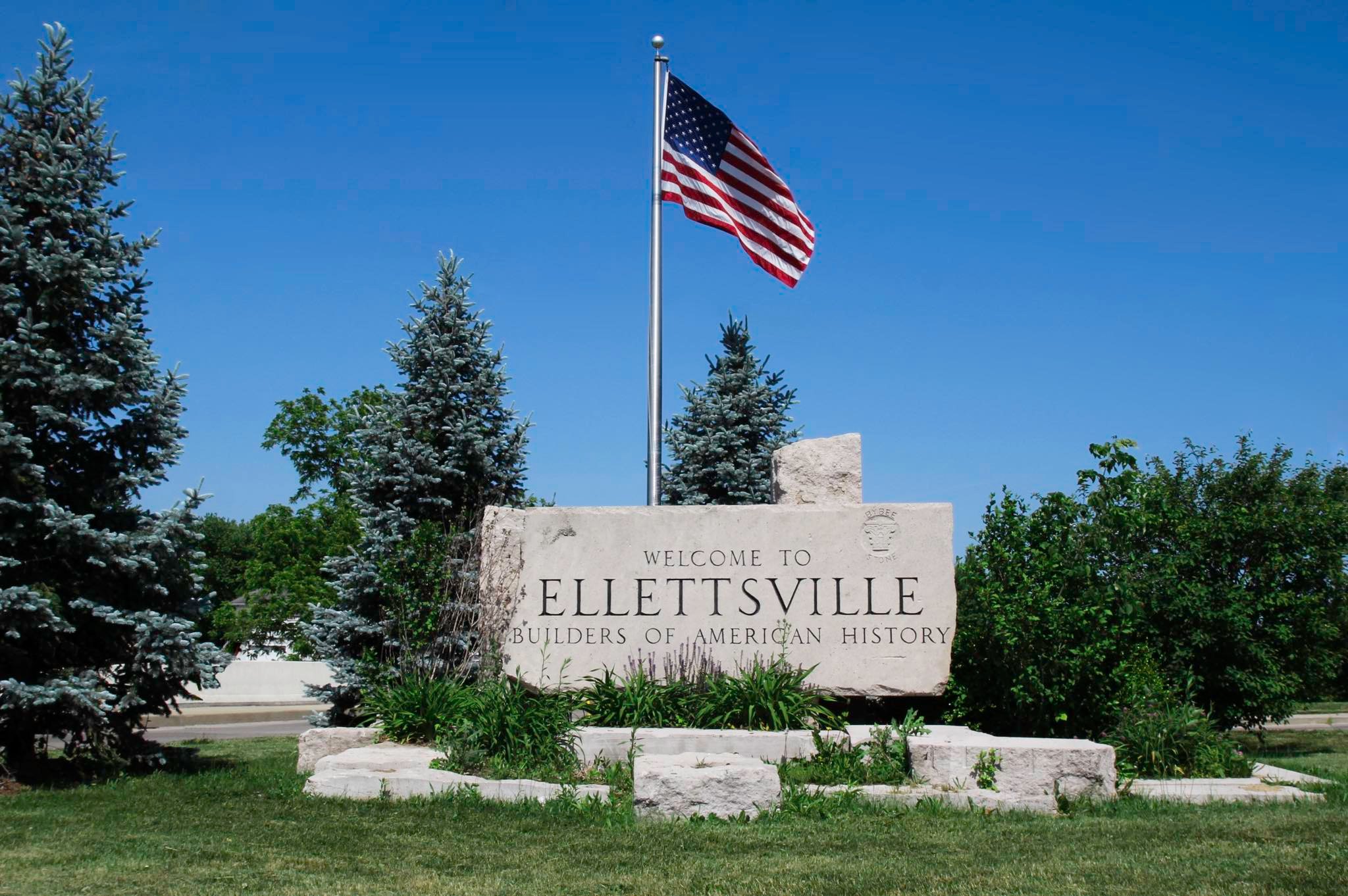
A Reader Asks: Is Richland Township Protected Because Ellettsville Is Inside It?
 Bob Taylor
Contributor
Bob Taylor
Contributor
No. Richland is not an exception to the township plan. Ellettsville sitting inside the township is the reason a merger was available. It is not a shield against one.
The question came in after our look at how Indiana is pushing township government toward consolidation. A reader had heard that Richland cannot be dissolved because the Town of Ellettsville lies within it, and that people worried about losing their township were really worried about exactly that kind of absorption. The worry is aimed at the right thing. The protection is not in the statute.
What the law actually exempts
Senate Enrolled Act 270, signed in March, sets a mandatory track for “designated townships,” scored on a state point system. It does not spare a township because a town happens to sit inside the township lines.
The municipal off-ramp runs the other direction. A designated township can be pushed into a city or town only if at least 80 percent of the township’s boundaries coincide with that municipality and at least 51 percent of the township’s population already lives inside the corporate limits. Baker Tilly’s own note on SEA 270 states that test. The other off-ramp is procedural: the chapter does not apply to a township that, by June 30, 2027, has begun to consolidate with another unit under the older reorganization law, IC 36-1.5-4. Counties with a consolidated city are out of it. Monroe County is not one of those.
Richland fails the geography test.
The 2020 census counted 15,098 people in Richland Township, across 35.44 square miles. Ellettsville, the vast majority of which lies in Richland, was 6,655. Even if every Ellettsville resident were counted inside the township, that is about 44 percent, short of 51. The town is a few square miles inside a 35-square-mile township. Eighty percent boundary coincidence is not close. A sliver of Bloomington’s west edge is also inside Richland, which cuts the other way: the township is not nestled inside one town. The town is nestled inside the township.
Containing Ellettsville does not protect Richland. Indiana’s reorganization statute has long allowed a township and a municipality in that township to put a consolidation before voters. That is a choice the two boards have already made. It is not an immunity the map conferred.
The ballot is the dissolution
What Richland does have, for now, is the procedural off-ramp, and the price of it is the thing the reader thought the township was protected from.
Richland and Ellettsville opened a reorganization last fall. A local committee drafted the plan. Baker Tilly wrote the fiscal impact analysis. On May 27 both boards forwarded that analysis to the Department of Local Government Finance. On June 22 both adopted the plan. The public question is on the November 3 ballot. If it passes in both units, the unified town takes effect January 1, 2027, and Richland Township ceases to exist on December 31, 2026.
Starting that process before June 30, 2027, is what keeps Richland off the state’s mandatory list. Voting yes does not save the township from being absorbed. It chooses the terms of the absorption, on a local calendar, instead of waiting to see whether the point system comes for it later.
The ballot language is plain. Richland Township and the Town of Ellettsville consolidate into a single unit, governed as a town with a seven-member council: five district seats and two at-large. Two taxing districts sit underneath. An urban district tracks today’s town limits. A rural district covers the rest of the township. The committee’s own materials are at ellettsvillerichlandinfo.org. The B Square’s account of the June votes has the rate sheet.
Baker Tilly projected a property-tax rate of $0.7028 in the urban district and $0.2776 in the rural district, against current rates of $0.6160 for Ellettsville and $0.1644 for the township. Town residents pay more. Township residents outside town pay more than they pay the township now, and less than town residents. One government, two rates, and no township board after New Year’s if the yes votes carry.
The state’s review did not bless it
The DLGF does not approve or reject a reorganization. Its review, after the May 29 filing, flagged holes in the Baker Tilly analysis. Fund allocations are not reconciled. There is no interlocal agreement on the page for roads or police in the rural district. Gas-tax and wheel-tax estimates are unclear. The jump in township-assistance expense is not documented. The Bloomington portion of Richland is left outside the new town’s tax base, while the plan still assumes township duties continue there unless a transfer agreement is signed under IC 36-1.5-4-40.5. Those are comments, not a veto. They are also part of the record a voter can read before November 3.
The consultant is a separate argument
A reader who has followed the statewide fight will have seen the Blackford Ledger account of a September 29 legislative forum. Sen. Chris Garten of Charlestown called Baker Tilly’s SEA 1 projections a bogus product because they assumed zero growth in assessed value, and told local governments they should fire the firm. Rep. Craig Snow of Warsaw called the public-sector practice egregious and said fiscal advisors have been the winners since 2001 by urging debt. The firm’s municipal-advisor letters disclose fees tied to the size of a transaction and contingent on a deal closing, which a bond advisor has to disclose under MSRB Rule G-42. Roughly four in five Indiana local governments contract with the firm for this work.
That is a real argument about who gets paid to explain a tax cut. It is not an argument that Richland is exempt. Baker Tilly was hired to run the local fiscal sheet. Elected officials, the reorganization board, and department heads put their own time on the plan. A paid analysis can be thin in its assumptions, and the DLGF comments say this one is, without turning the ballot question into something the state forced. The boards adopted it. The voters have it.
No thoughts yet — be the first.