“High Crime, LMAO”: Law Enforcement has to answer for Flock Use.
 Daniel Pierson
Contributor
Daniel Pierson
Contributor
The Electronic Frontier Foundation reveals popular Indiana Flock search terms used by law enforcement.
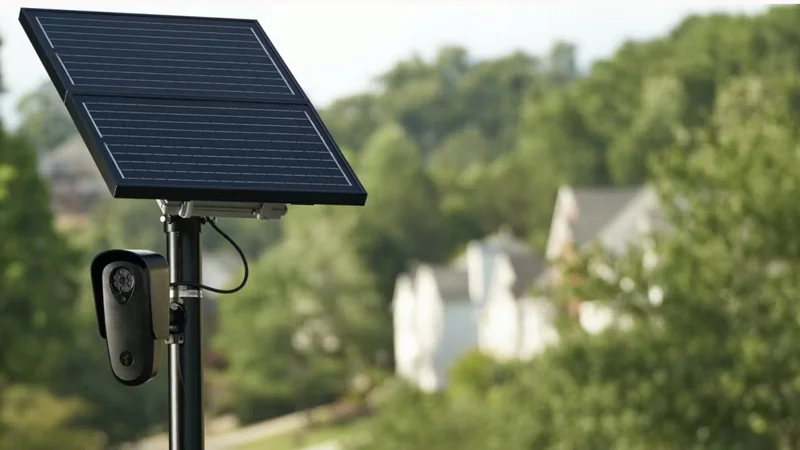
In “The High Crime of ‘LMAO’: How Cops Are Treating Mass Surveillance As a Joke”, EFF walked through audit logs from automated license plate reader networks the Flock-style cameras that sit on poles in Goshen, Fishers, Michigan City, Lake County, Greene County, Jackson County, Lawrence County, and most of the rest of Indiana and found officers typing reasons such as “LMAO.” “idk.” “blah.” “Hehe.” “sexy.” Button-mashing. “f*ck this new search engine.”
That last one was Michigan City Police. “LMAO” was Lake County Sheriff’s Department, July 2025. “blah” was Fishers Police, May 2025. “idk” was Goshen Police, May and June 2025 including one officer who, on May 7, 2025, searched 6,474 ALPR networks drawing on more than 82,000 cameras and left “idk” in the justification field.
Indiana was not merely a slice of the information. Indiana made up the the whole sample.
The statewide camera farm
Eyes Off Indiana now documents thousands of ALPR units across 84 of 92 counties. Marion County leads raw count. Lake County is next. In our own map the density is the insult: Greene County sits near the top of the per-capita list for a rural county, with more than two dozen documented readers. Jackson County is in the same conversation. Monroe still shows cameras even after Bloomington said it was walking away from Flock.
There is still no statewide statute that tells a sheriff how long he may keep a plate hit, who outside the county may search it, or how often anyone has to read the audit log. Indiana left the honor system in charge of a national search engine pointed at every windshield.
The honor system has had its time.
Not jokes. Cases.
The EFF logs expose the culture.
In Jackson County, former sheriff’s deputy Skylar Thompson was arrested after the office’s own audit. Prosecutors say he searched the same plate 2,055 times between Dec. 31, 2025, and Aug. 2, 2026, and wrote “City Planning/Traffic Analysis” as the reason every time. The sheriff’s office says he was never assigned city planning or traffic analysis. He was charged with official misconduct, a felony, and fraud, a misdemeanor.
In Indianapolis, IMPD Chief Tanya Terry recommended termination after an east-district officer ran “hundreds” of Flock searches on a handful of plates with no official case. The Washington Post, using Have I Been Flocked data, reported the officer appeared to track vehicles used by his wife and two acquaintances thousands of lookups over ten months. Terry called it “intentional misconduct.” The department revoked his powers, opened a criminal investigation, and started rewriting the general order so a search has to attach to a real case file.
In Porter County, a lieutenant was demoted, suspended without pay, barred from Flock for good, and sent to ethics training after searches tied to a personal relationship. Institute for Justice reporting named Lt. Michael Piazza and said the plate belonged to a woman he was involved with. A special prosecutor later took the file after the elected prosecutor first declined charges.
In Chesterton, Cpl. Christopher Schoof resigned Aug. 27 rather than sit a termination hearing after an out-of-state paper asked about his Flock inquiries in 2024 and 2025. Indiana State Police and a special prosecutor opened a review. On Sept. 14 the Chesterton Town Council voted 5-0 to kill the town’s Flock contract by Oct. 31. Council President Erin Collins said the town was unwilling to keep the cameras until the safeguards existed.
In Michigan City, an officer resigned mid-investigation after a routine audit found searches the department said were not legitimate. The file went to the LaPorte County prosecutor. This was days after the department had been at council talking about adding more readers.
Different counties. Same problem: a national plate database that where “because I felt like it” can be sufficient reason until somebody outside the department reads the log.
Greene and Lawrence already had the argument
Greene County paid for a five-year Flock package in late 2024 and early 2025. By August 2026 a Linton News survey of 419 votes showed 77.3 percent opposed or deeply skeptical. Sheriff George Dallaire’s answer was the line that still hangs over the county: “I don’t call 324 people’s opinions clear and convincing.” He said the technology is “not as intrusive as many are led to believe due to disinformation spread by anti-Flock groups.”
Lawrence County Resident Nikki Luallen started Ban flock cameras and eradicate ALPRs in Lawrence County after counting readers on rural roads. By late August the petition had passed 500 signatures. Her point was the Fourth Amendment. Greene residents had already put up Remove all Flock cameras from Greene County, Indiana. Bloomington protesters filled the hall in January; the city announced in April it would not renew the LPR contract after a council fight over ICE access and data sharing.
Is it worth it?
Police chiefs will tell you Flock finds the stolen truck, the missing kid, the hit-and-run. Sometimes that is true. A tool that can locate a plate in ten counties in ten seconds will occasionally locate the right plate. That is not the question.
The question is whether a system that lets a Goshen officer query 82,000 cameras with “idk,” a Jackson deputy hit one plate two thousand times under a fake duty, and an Indianapolis officer run his own family's car is a system a free county should buy.
Every new “safeguard” arrives after the abuse. Daily audits after IMPD. Ethics class after Porter. Contract cancellation after Chesterton. Dropdown menus “Traffic infraction,” “Other” that EFF warns will hide the misuse behind a generic fields. The vendor can shorten retention to seven days while the national database stays persistent. The few who misuse it do not need a year of data. They need trained on what warrants a search. Keyword being warrant.
Unalienable rights do not get parked because a handful of cases get closed faster, or because a vendor promised the next version will be better behaved. The whole point of a right that cannot be alienated is that the needs of the few even the needs of a police department, even the needs of a frightened town do not get to spend it. Trading the ability to drive to church, the clinic or the next county without building a searchable footprint as a public-safety compromise. It is the opposite of the premise the country was built on.
If the cameras only worked when a judge had signed a warrant on a particular plate, improper searches would stop. Everything short of that is an honor system using a technological power that would have been considered science fiction 20 years ago.
The people who already said no
Indiana does not lack an opposition. It lacks a statute.
- Eyes Off Indiana — statewide map, county reports, petition for retention limits, access rules, and audits. Start with Greene County’s page.
- Eyes Off Indiana petition (signatures collected toward General Assembly action).
- Greene County removal petition.
- Lawrence County ban petition (Nikki Luallen).
- Have I Been Flocked — the lookup that newspapers used to find the personal searches departments had not audited.
- EFF’s LMAO investigation — the document that put Goshen, Fishers, Lake County, and Michigan City in the same paragraph as “sexy” and “idk.”
The cameras are still up in most of the eight counties this network covers. Rights that can be typed over with “LMAO” were never secured. They were leased.
No thoughts yet — be the first.